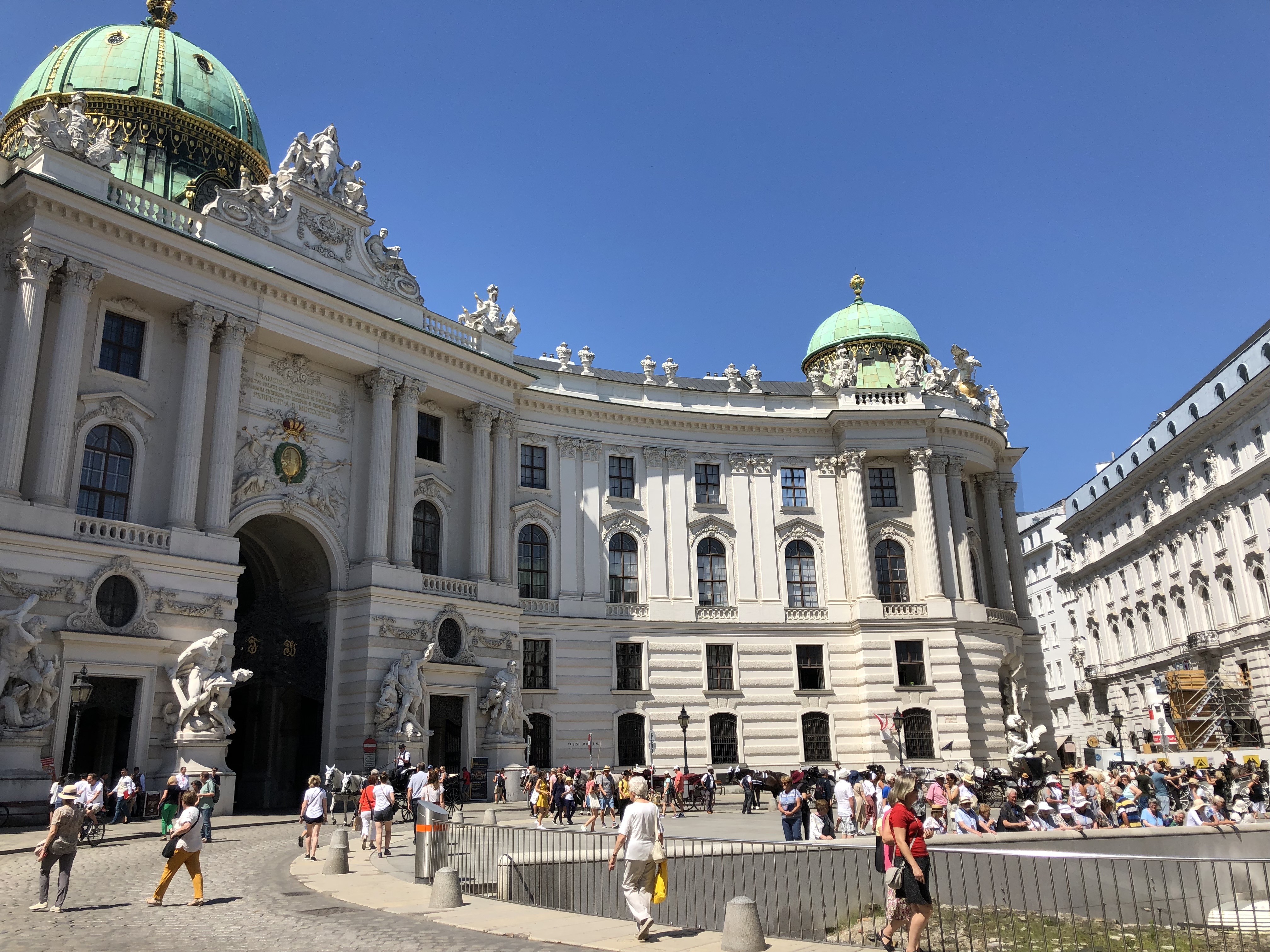
Walking up to the Hofburg, I felt small as I gazed upwards at the magnificent building in front of my eyes. The building itself was smooth and white, and had shining teal domes on top. The white building was outlined with shimmering gold. The imperial family used to live in this palace, but it now serves as a museum about their daily lives.
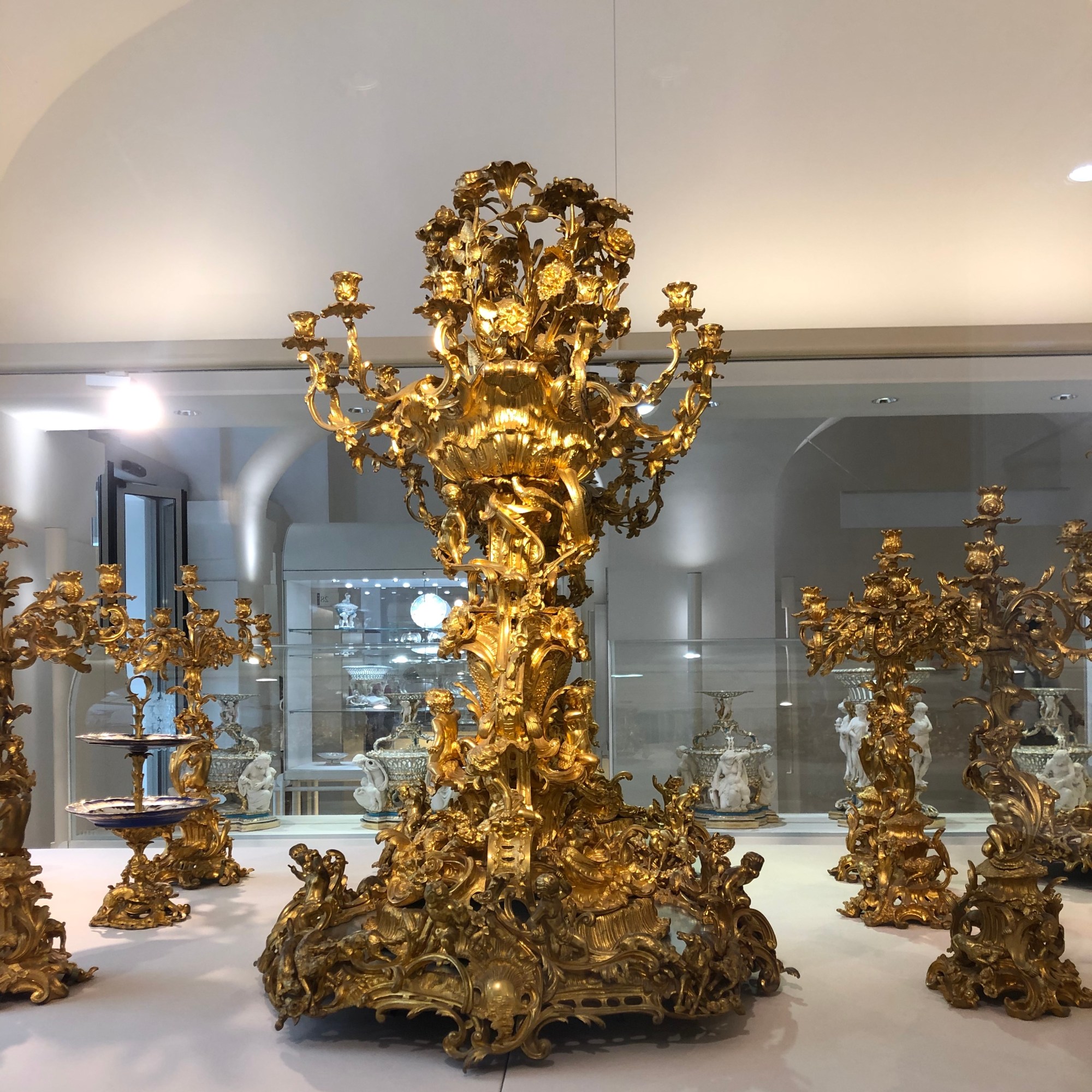
Entering the Silver Collection exhibit in the Hofburg, the gleaming metals in the room immediately caught my eye. According to our tour, the meals were served on shiny plates of gold and silver, while dessert was served on special porcelain. Crisply folded napkins were placed on the plate. Magnificent gold candle centerpieces were placed in the middle of the table, with large porcelain serving platters surrounding it. All of this, for a dinner meal! Unique crests were burned into the dishware, crests unique to each family’s name. Imported dishware was displayed from all over the world, from royal families of other cultures. The richness of the table décor made me full without even eating the food. It was clear that the imperial family was treated with the best service for their time.
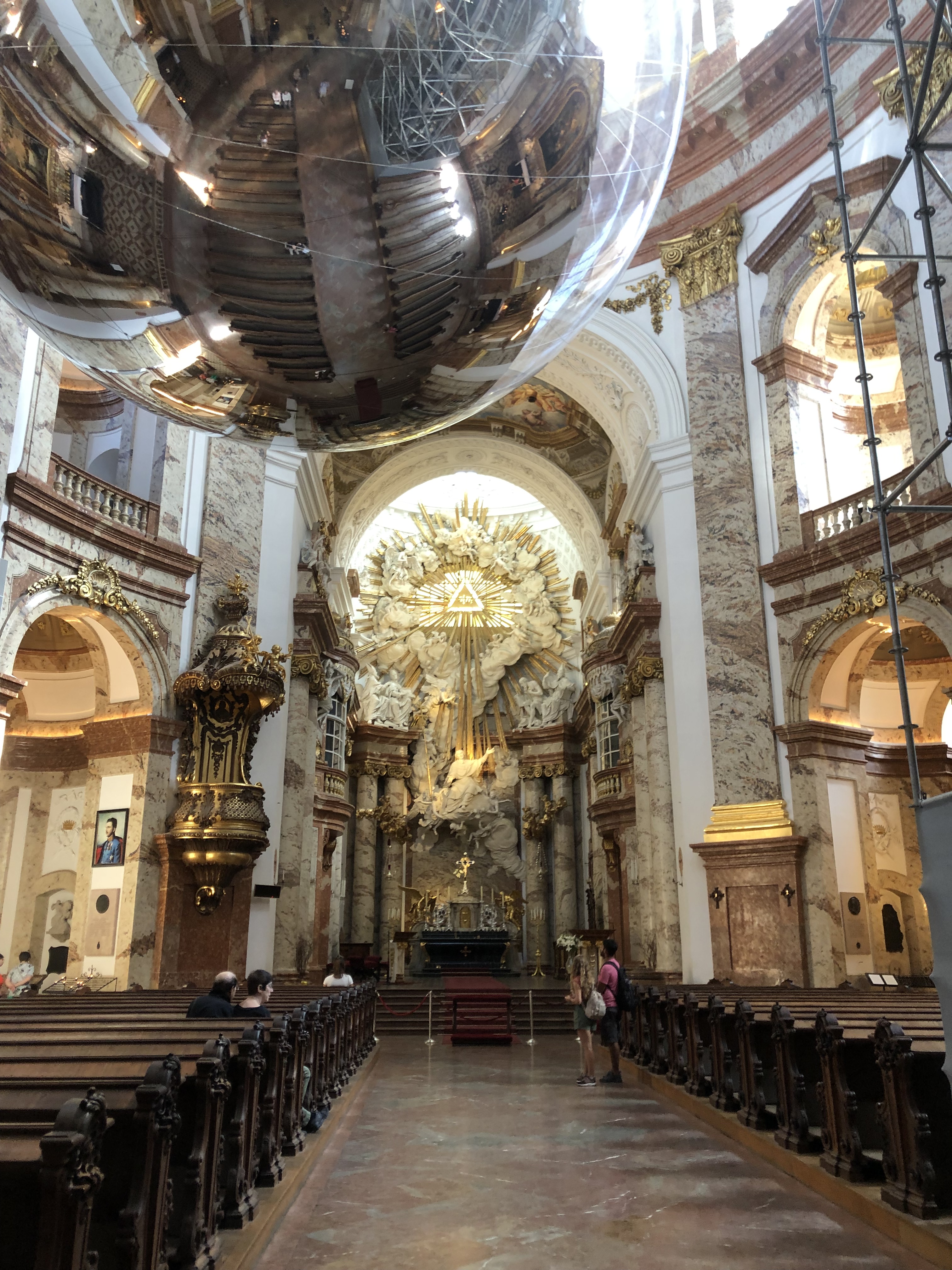
The inside of the Karlskirche was breathtaking. There were dark stained wooden benches perfectly lined aligned in the church, and the walls were marbled different shades of brown with white lining. Windows brought in natural light that illuminated the golden features in the room.
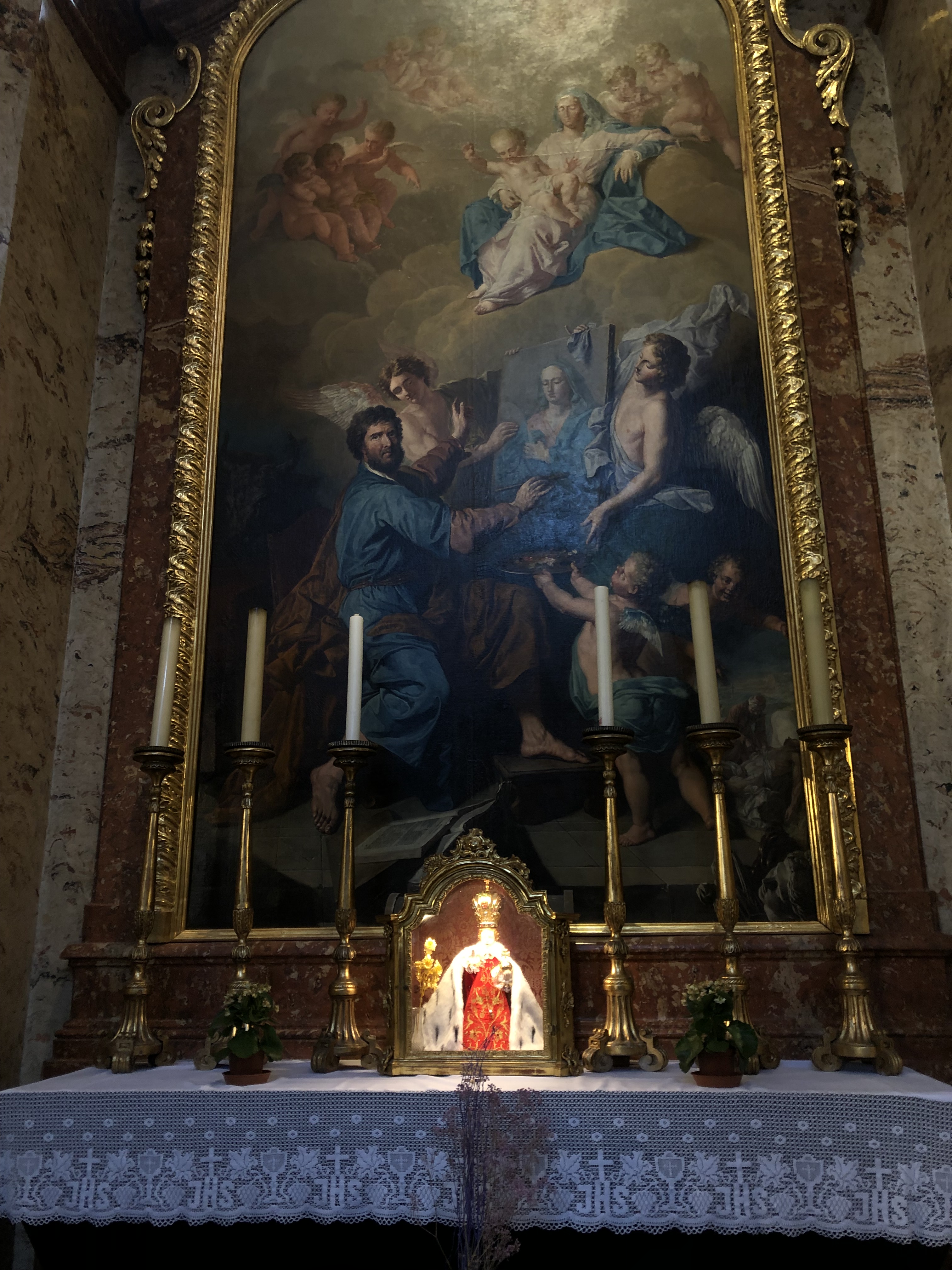
Around the room, there were a few alters, with a light grey embroidered table cloth. Behind the table was a golden framed painting with baby angels in the sky, and one lady with a halo holding a baby in the middle of the rest of the angels. Underneath the sky, there was a man that had a painting of a woman, with angels surrounding him and holding up the picture for him. There were six golden candle holders with candles on the table, with a golden framed, illuminated picture of the king.
A similar alter was set up on another wall. This one had a framed picture of the queen. The tablecloth had the same candles, but also had two vases of white flowers. The hanging painting behind the table was also different. In this painting, there was a crowd of older men, with Jesus in the middle standing healing a shirtless man. I remembered that Ferguson had written that King Charles VI was inspired by the plague, which was a prominent issue while he was ruling (320). The paintings behind both of the alters depict religious healing, and this must relate back to the issues that King Charles VI was facing with the plague.
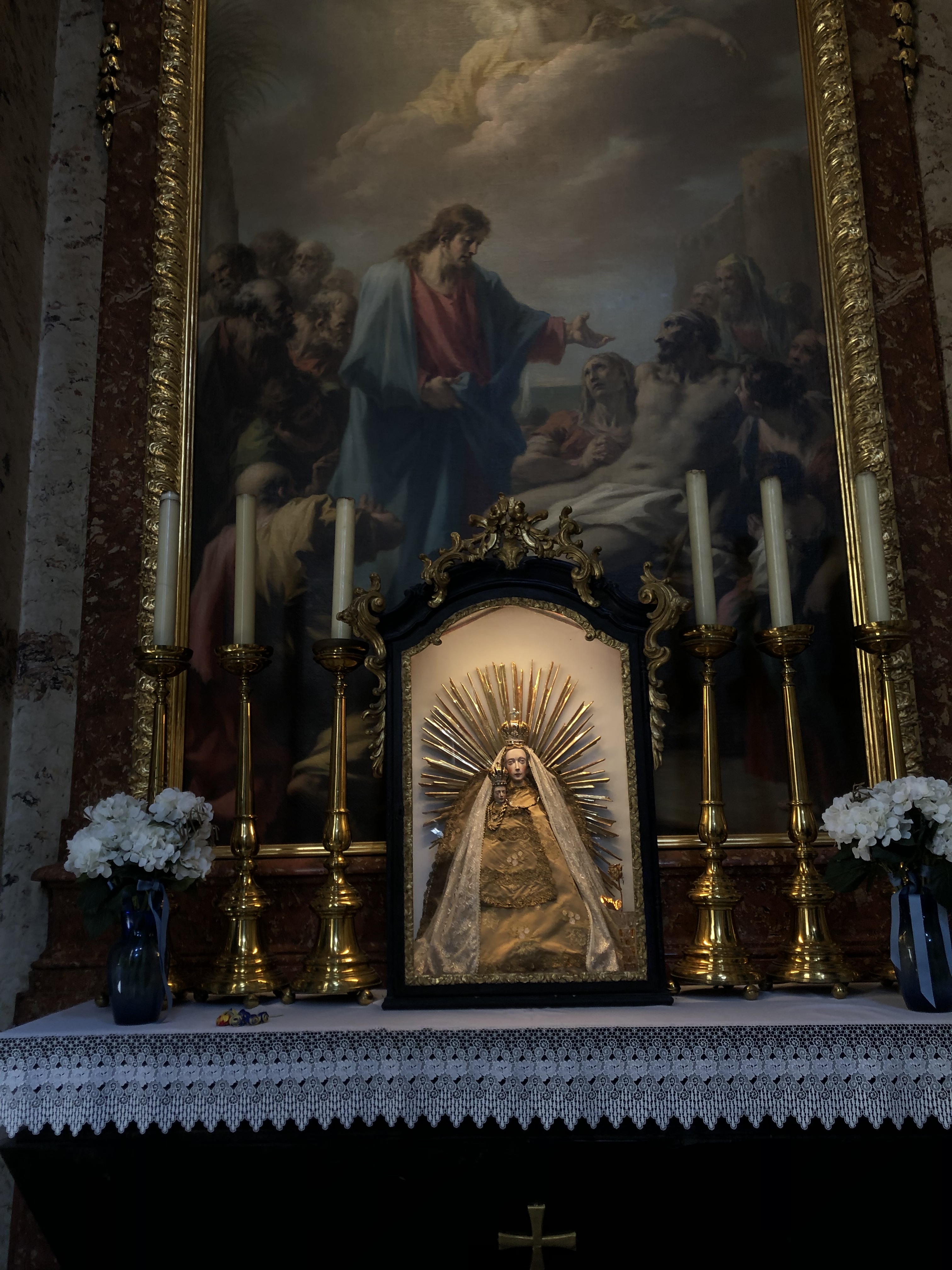
These alters particularly intrigued me because of the combination of religious and royal motifs. Throughout history there was little separation between church and state, and these two influenced each other greatly. I remember reading that King Charles VI had a large part in the building of this church (Fergusson 318). It makes sense that he was heavily involved in the construction of the church because the décor was very much based on him and his life. It was interesting that the political issues that he faced were represented in the church.
Exiting the building, I look again at the exterior and realize that I’ve seen this color scheme on other royal palaces in Vienna. According to Frisby, buildings are given representative and symbolic value through the material and social hieroglyphics (16). From my observations and our class discussion, it appears that the massive buildings were decorated with this color scheme to distinguish themselves from other social classes. It was very clear that the “special treatment” of the wealthy was prominent in society through strict distinction. I overall observed both social class “privilege” and political motivation in the architecture in the Ringstrasse area .
Fergusson, Frances D. “St. Charles’ Church, Vienna: The Iconography of Its Architecture.” Journal of the Society of Architectural Historians, vol. 29, no. 4, 1970, pp. 318–326. JSTOR, http://www.jstor.org/stable/988594.
Frisby, David. “Otto Wagner and Vienna’s ‘Second Renaissance’.” The Metropolis as Text, doi:10.1080/14735789709366600.
 Architecture of Vienna