My first observation at the Reumannhof was the boys playing basketball at the public court across the street from the apartment complex. There was no complex or elaborate set up, it was simply just an open court for anyone to enjoy next to busy streets. The boys were very energetic, screaming and laughing with each other. This place was the closest that I have felt to home since coming to Vienna. I felt very welcomed walking around here, as well as very safe. These apartments were completely different than the well-maintained palace, the grass was not perfectly green and there were more casual sitting areas. I would use the word “plain” to summarize the environment here: there were no intricate designs or too flashy of colors. It occurred to me that this place felt so comfortable because it was closer to my idea of a “normal” building, one that is not excessively decked out in decorations.
“These apartments were completely different than the well-maintained palace, the grass was not perfectly green and there were more casual sitting areas. I would use the word “plain” to summarize the environment here: there were no intricate designs or too flashy of colors”
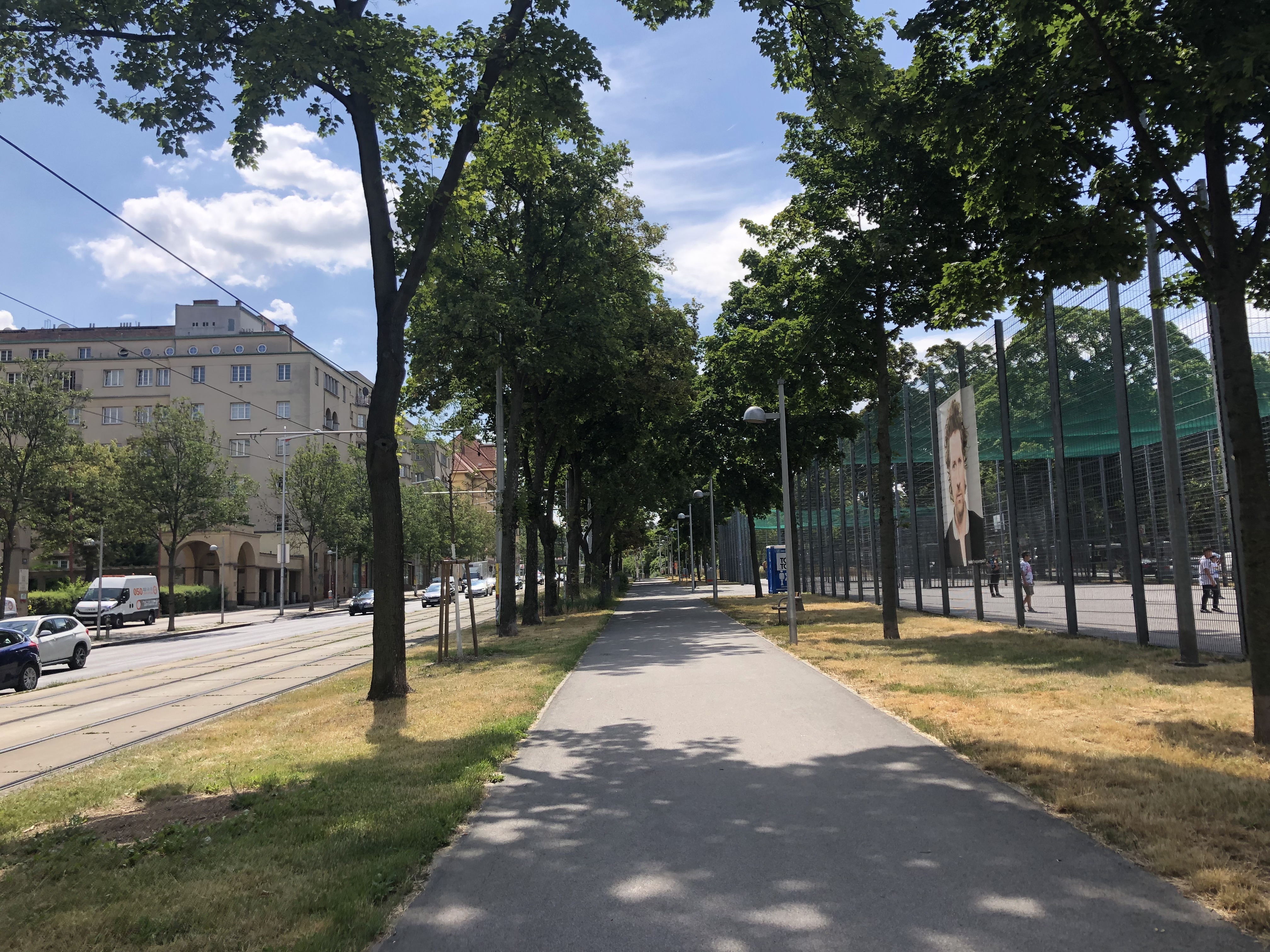
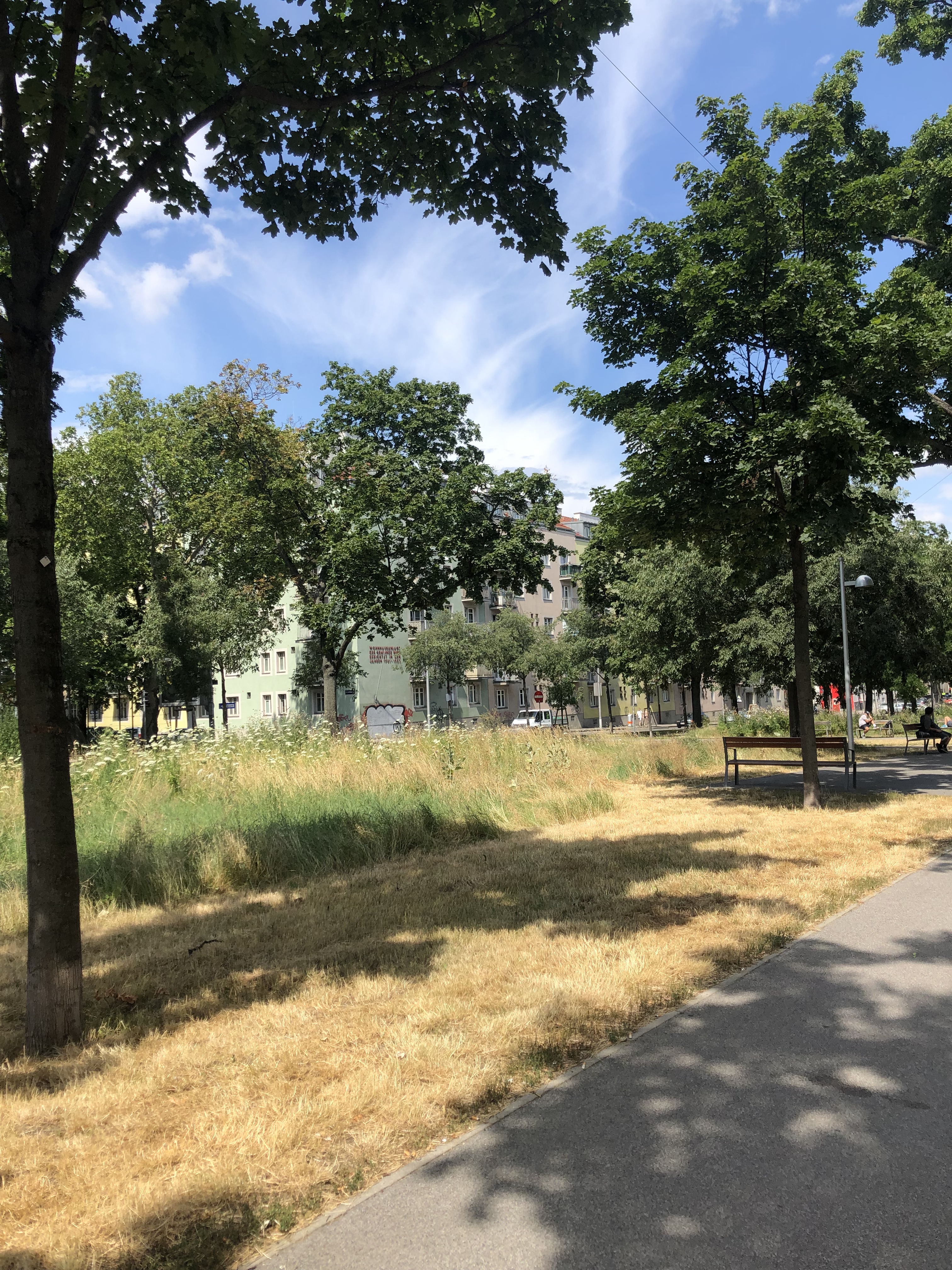
The apartments themselves were not extremely luxurious, but they appeared to be very functional. I figured that the renters would not break the bank once living there. While I felt comfortable being there, I did notice that it was very loud from the traffic compared to other places that we had been. This location was well-accessible for family and friends to visit. When I was thinking about the location and setting of this apartment complex, it made me realize that these buildings seemed to be a lot more modern and had more features that were relatable to our society today.
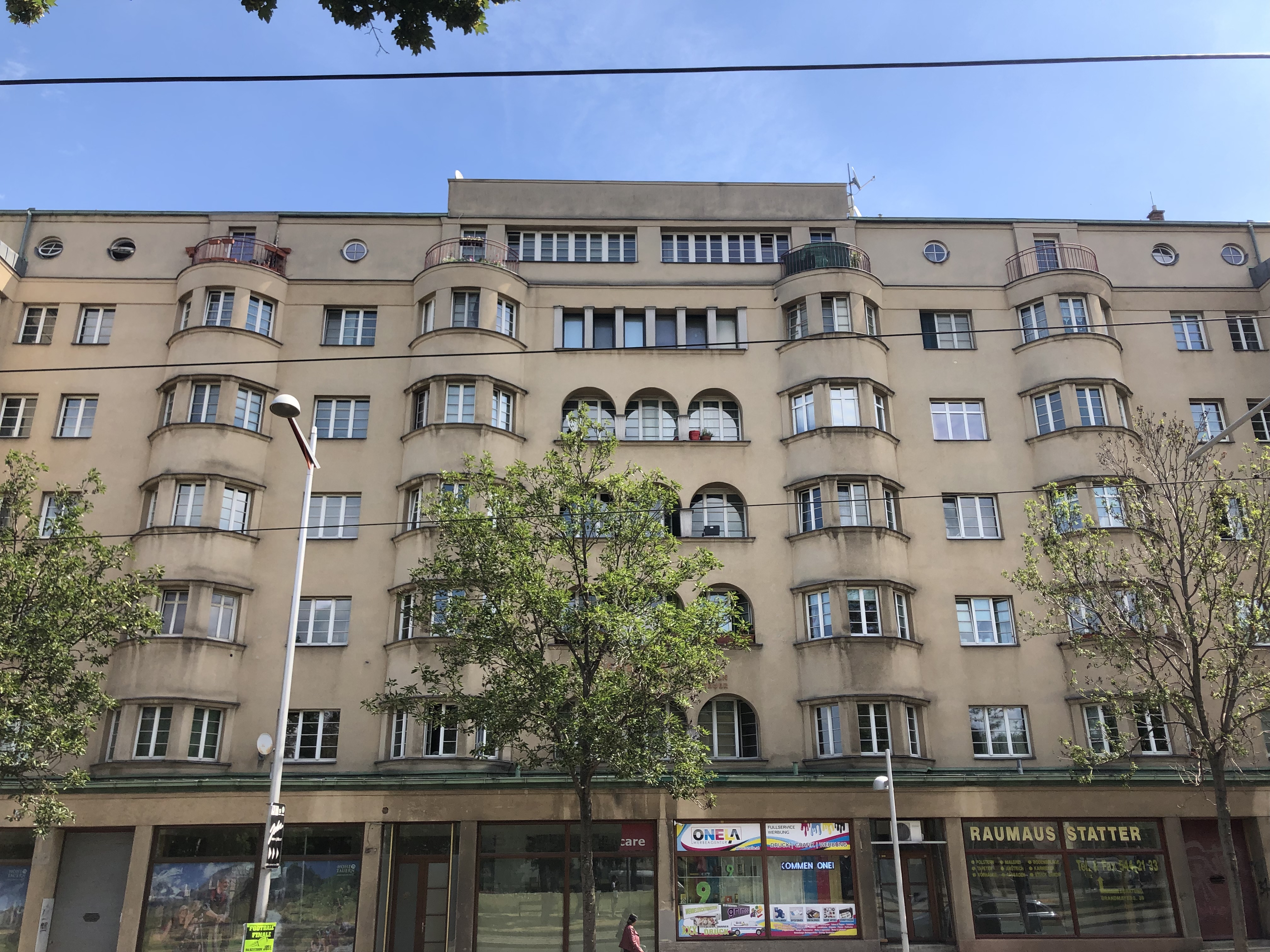
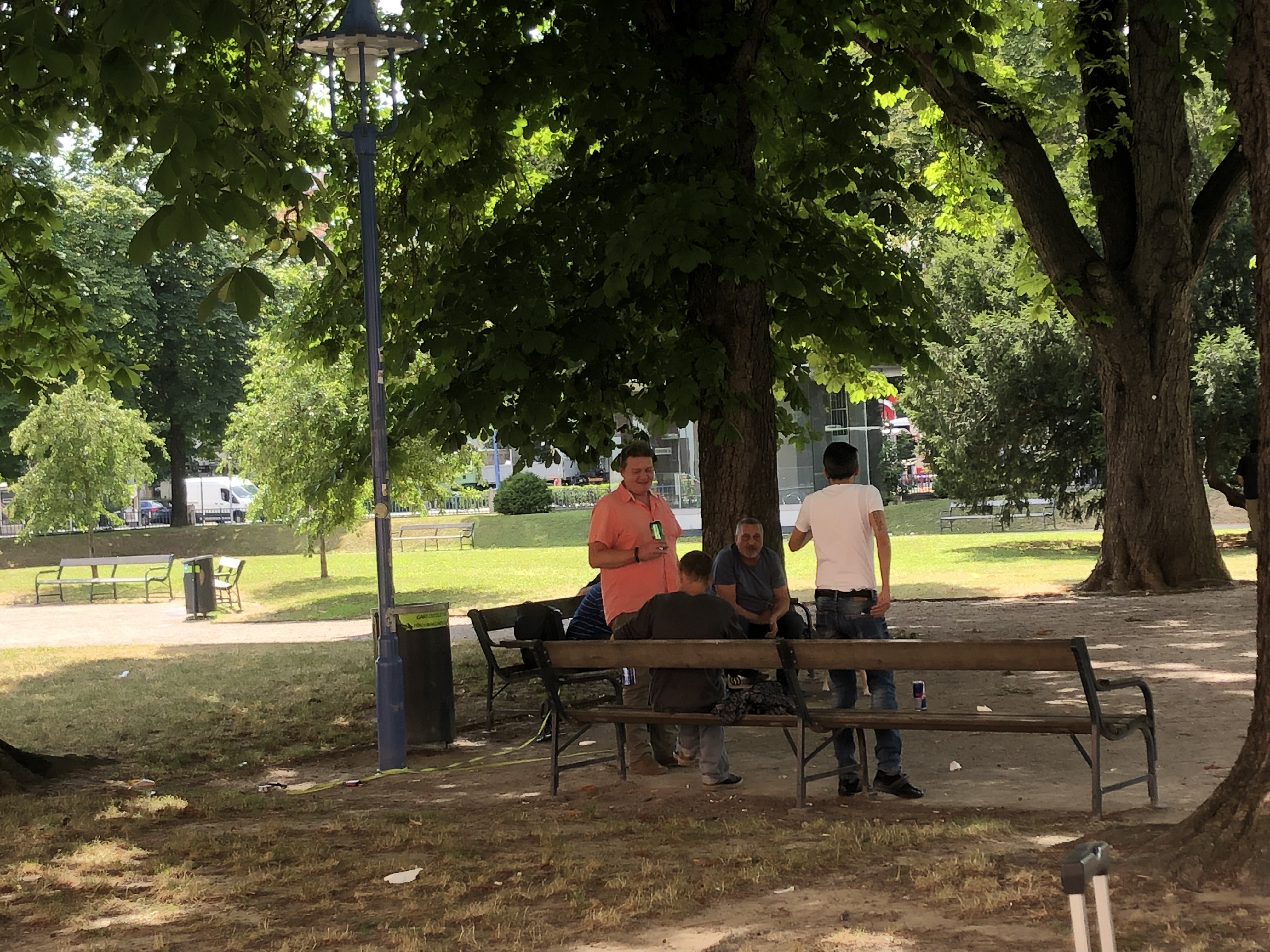
Looking around outside, the complex contained a lot of convenient outlets for people to enjoy. There were food options that were close, the tram station was nearby, and there were places to sit in the shade and enjoy each other’s company. I thought about how this building reflected this growing idea of “community” at the time of the building.
The tour of the Karl Marx Hof gave me some insight into the backstory about how the apartment complexes came to be. I did not realize that these buildings represented a social change for the people, how it was built in a massive project with the intent on making life better for a large portion of the city’s population. They did this by “evening” out the field between the bourgeois and working class. I thought that this social movement was inspiring, especially because this movement is reflected in the architecture.
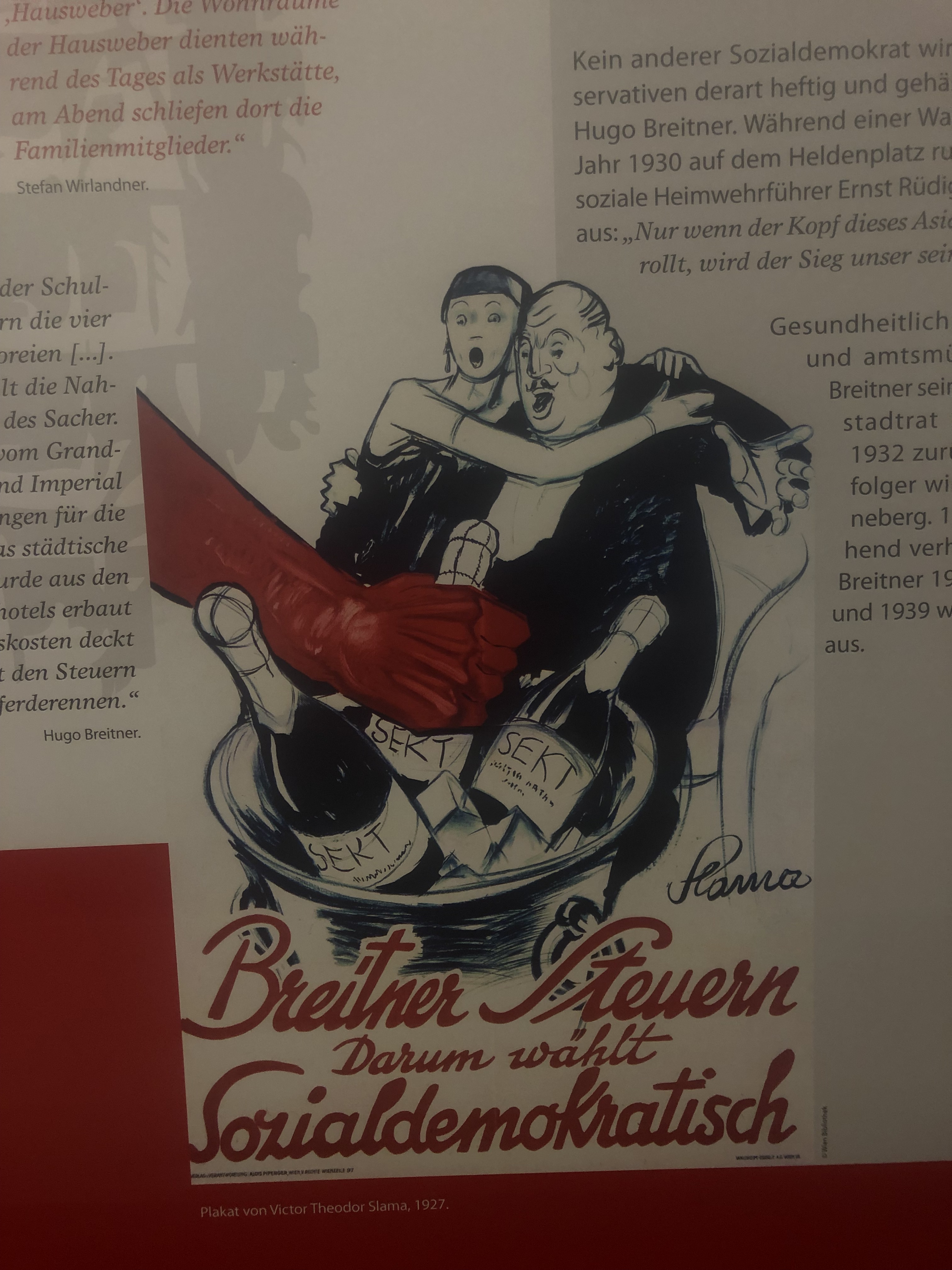
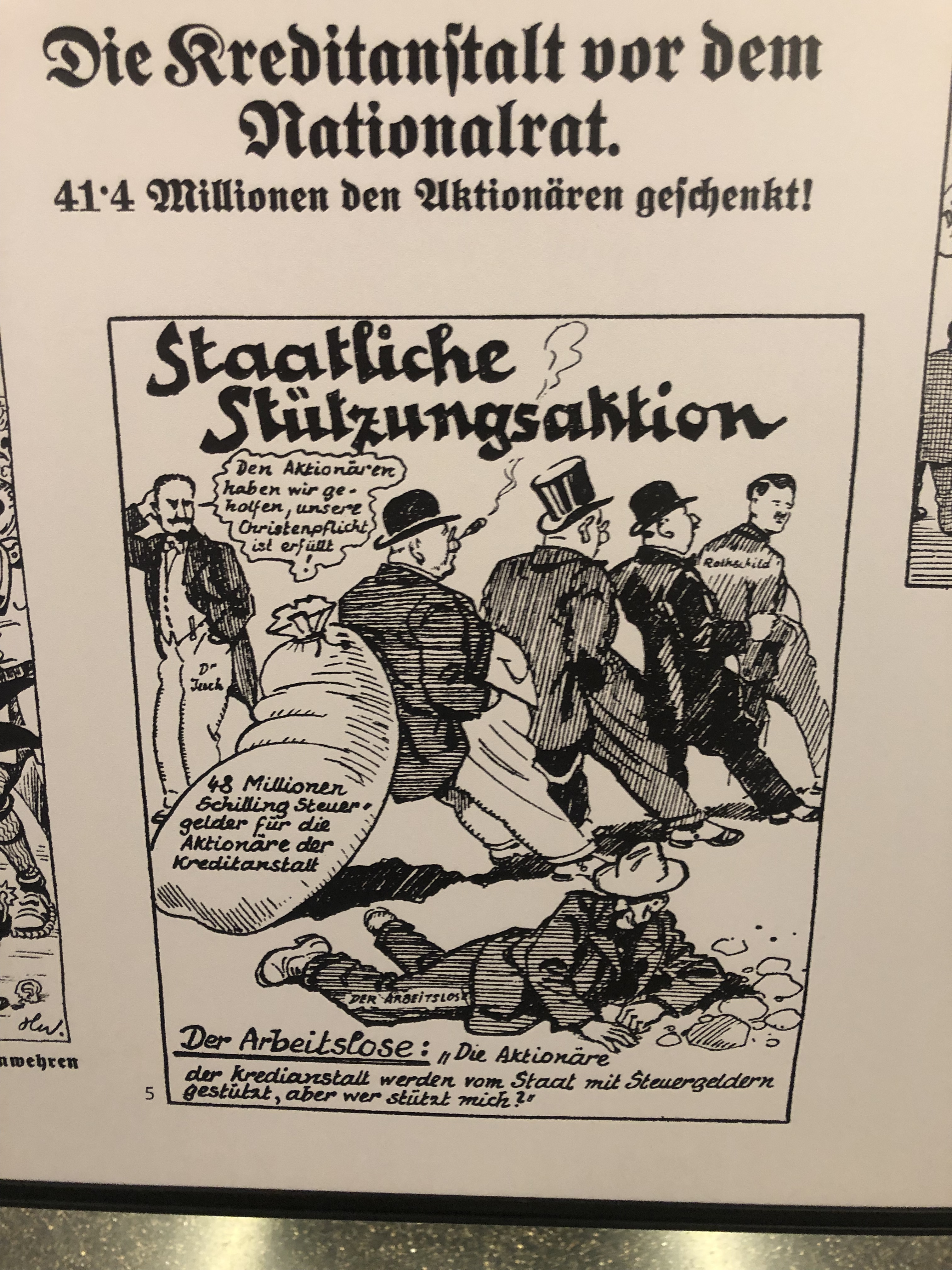
I was curious to know how much planning went into arranging this building since it was so revolutionary for its time. According to Blau, experts collaborated on multiple aspects of the building, including design, construction, interior decoration, farming and animal husbandry, a bank, and a settlement museum (97). I thought that it was interesting that the houses were based off of three previous living designs combined, which were rural peasant cottages, suburban middle-class cottages, and English working-class row houses (105). The size of this project was huge, according to our tour guide 60,000 apartments were built. I was very surprised when I learned that this many apartments were built on a little to none profit. I thought that it was really cool that the project also seemed to bring together experts of different fields to work together in a community-like fashion, and create something completely new.
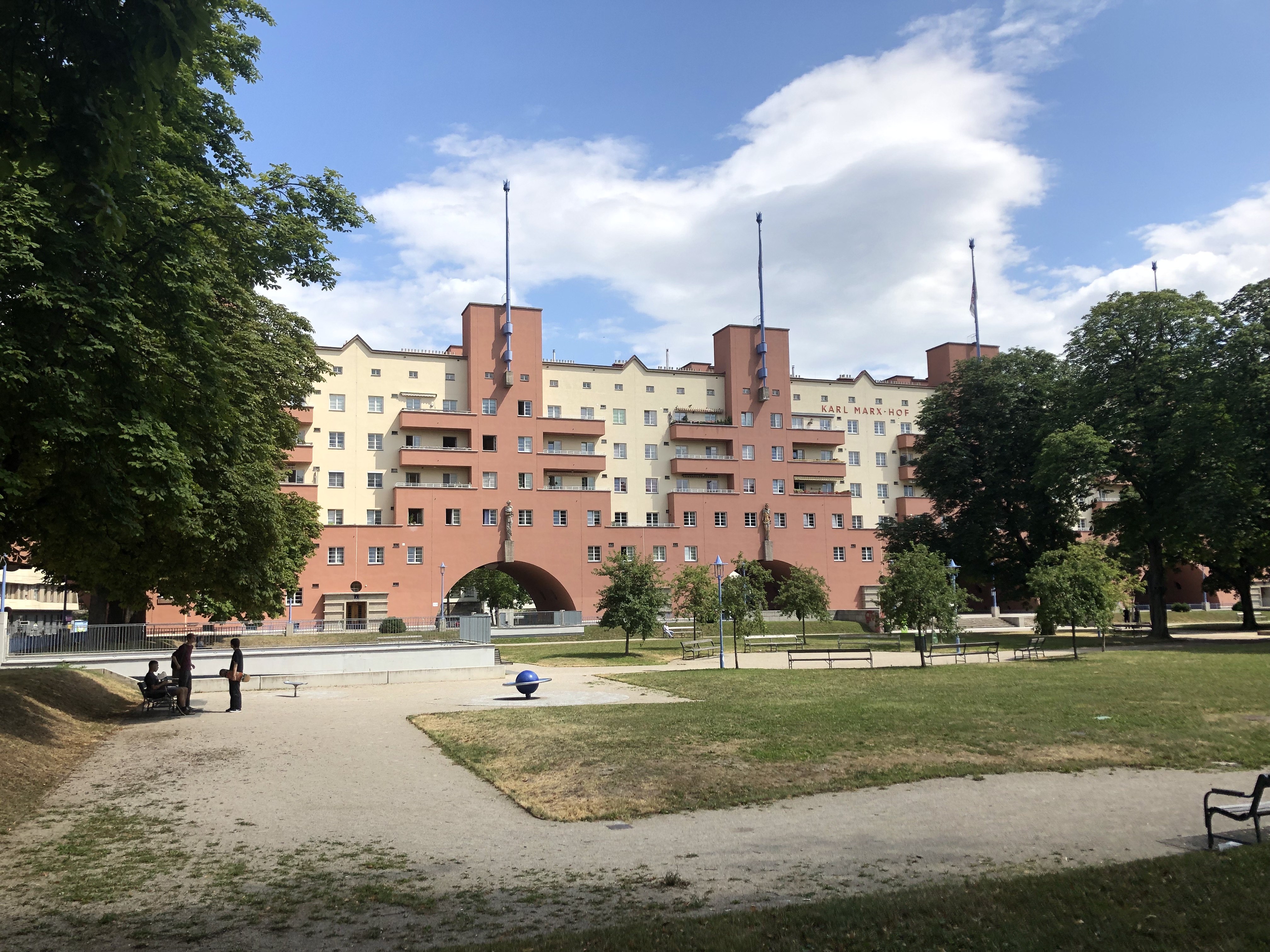
This social change amazed me, that this housing issue was heavily prioritized and improved people’s lives significantly. It also amazed me the amount of preparation that people put in to perfect the buildings. According to our tour guide, the apartments had interviews to prioritize those who needed new housing, which made me happy that they wanted to help those that were struggling with sanitation issues or anything else that restricted them.
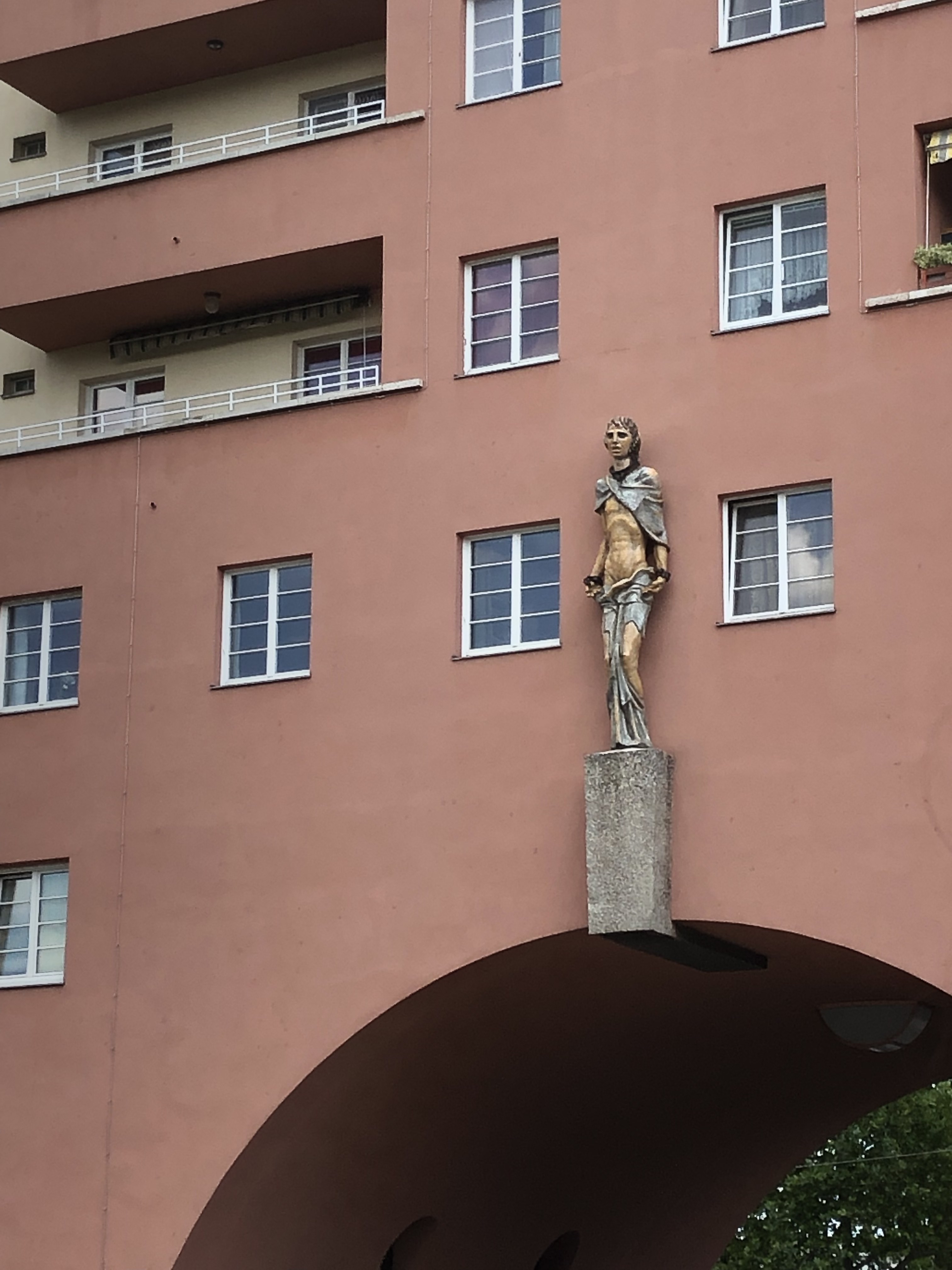
The buildings had some color and there were statues outside, things that were previously only enjoyed by the upper class. To me, these little additions represent how life for the lower and middle classes became better. I saw this change in how they recognized that the lower social classes can enjoy beauty, just as the upper class did. One statue in particular stood out to me (pictured below). The tour guide informed us that it represented that liberation was to come. She said that it was a visual representation that it was a start to change, but still represented a hope for further change.
Blau, Eve. The Architecture of Red Vienna, 1919-1934. The MIT Press, 1999.
 Architecture of Vienna